How many mobile phones do you own? 1? 2? It is normal to see that more than one mobile phone is often in the hands of a consumer, and that leads to the percentage of mobile penetration is greater than population. Can you imagine how impactful mobile marketing is? Be the first few to tap into the mobile marketing market!
The growing mobile penetration in Indonesia coupled with remarkable improvements in mobile technology brings a new opportunity for marketers in the country to attract consumer attention. Mobile marketing is the new area for both marketers and solution providers to grow into. To address the potential and challenges of mobile marketing in Indonesia, Pacific Conferences is organising a two day conference on “Mobile Marketing” that will be held on 23 – 24 February. The conference will have industry experts and brand experts talking about how mobile marketing can be a viable channel to attract, capture and retain customers.
While businesses worldwide are embracing mobile technology as lucrative avenues to target consumers with their brand messages, in Indonesia it is still in a nascent stage. Pointing this out, Liam MacManus, digital director, Mindshare says, “Everyone has been talking about the opportunities for Mobile in Indonesia, but how many brands are really taking advantage of this fast-evolving environment? Is it right for every brand? How can we truly understand how our consumers interact with the channel and what are the real opportunities for 2012?”
With increasing use of smart phones and other mobile devices, there is an increasing digitisation of life in Indonesia. Consumers in Indonesia are connected constantly through their mobile devices that now serve as their health monitors, payment transfer devices, social connectors etc. Social media on mobile is a growing trend in the region, and this provides the marketers a viable medium to create brand recognition and loyalty. Venke Sharma, senior vice president, Arc Worldwide points out, “Indonesian consumers consider social media on mobile as the New Mass media. Marketers have not leveraged the opportunity as much as they would want to.”
Brands might feel hesitant jumping on the mobile marketing bandwagon because they do not feel confident about their initial foray into mobile marketing. Mobile marketing experts say that companies face the challenge of creating a unique level of personalised, targeted, time and location-sensitive rich brand engagement and interaction with customers, which could be the reason behind a low key approach in mobile marketing by brands. Harith Menon, Head of Mobile, Nokia Siemens Network explains, “There is a lack of belief that beyond TV and billboard, there are other tools that can be used effectively for an Integrated Mobile Campaign.”
In order to enable maximum and impactful brand engagement, marketers need to be equipped with the most relevant insights, understanding and inspiration into the mobile milieu for a successful marketing campaign. Marketers need to leverage on the right tool for optimum engagement and create innovative apps to capture customers at various locations and at any time of the day. Mobile technology has significant impacts on lives of Indonesians as it creates new ways for marketers to engage and influence millions of consumers at the point of their decision.
Source: By Staff Writer on 31st January 2012.

Web SMS, 1-way Messaging, 2-way Messaging, SIM Hosting, Email-to-SMS, Developer (HTTP API & SMPP), White Label Reseller Program, HRL Lookup, Long Code Service, Non-premium Short Code, Industry Based Solutions etc. To know more about our products & services, visit our official websites: www.moceansms.com | www.bulksms.com.my | www.mocean.com.my
Thursday, 2 February 2012

Friday, 27 January 2012
Ireland - Translink Introduces Mobile Ticketing
With the advancement in smartphones and increasing mobile penetration rate, mobile ticketing is getting more popularised. Not only it helps to save costs (such as printing, maintenance costs) but also more environmentally friendly. So, the power of mobile phones can't be neglected. ;-)
Rail passengers in Northern Ireland can now take advantage of ‘on the go’ ticketing with the launch of mLink, Translink’s innovative new mobile ticket.
mLink enables passengers to buy, receive and display an electronic ticket on their mobile phone doing away with the need for a paper ticket and Catherine Mason, Translink Group Chief Executive, says it has been developed with the customer in mind:
“We are committed to constantly innovating and improving our service for our passengers and through mLink we are providing rail customers with a convenient and easy to use ticketing system.
“Tickets can now be purchased through customers’ mobile phones, making it both simple and safe to purchase tickets anywhere at any time without any time spent queuing at ticket offices.
“mLink tickets can be purchased and displayed using most standard mobiles as well as iPhone, BlackBerry and Android handsets.
“Tickets, purchased via the customer’s credit or debit card through a free to download app, can be bought up to three days in advance and can be stored and activated on the phone.
“The tickets are displayed as a ‘flash pass’ ticket with no electronic reading required, a visual check of the mobile phone screen by NI Railways employees at the ticket barrier or on-board the train is all that is needed.
“Rail passengers can purchase monthly, weekly or new 3 day flexi tickets** from their mobile phones, enabling users to avail of more flexible travel services to suit lifestyles and working patterns.
“This also offers excellent value for money; for example, the majority of our rail customers will save over £30 per month with a rolling monthly ticket.
“So, mLink now makes it even easier for our customers to enjoy great savings of over 28% with a monthly ticket, over 19% with a weekly ticket and over 15% with the new 3 day flexi ticket.
“In addition, from now until the end of February, we are also offering an extra 10% discount for mLink weekly and monthly customers.”
Mrs Mason continued; “With Northern Ireland having the highest mobile phone penetration in the UK at 92% and almost one quarter of people using smartphones, we are confident that mLink will soon prove to be the preferred option for train travel.
“We are encouraging as many people as possible to experience mLink as rail travel becomes more convenient, attractive and flexible. With the added convenience enabling customers to easily check prices in advance of travelling, buying tickets on the go is quick, easy and secure.
“Rail travel represents good value, especially in the current climate where the costs involved in running a car, for instance petrol and insurance costs, continue to rise.
“Additionally rail travel is an environmentally-friendly form of transport so the move away from paper tickets to mobile ticketing will make it an even greater form of sustainable transport in the future,” concluded Ms Mason.
Source: By A.Samuel on 9th January 2012.
Rail passengers in Northern Ireland can now take advantage of ‘on the go’ ticketing with the launch of mLink, Translink’s innovative new mobile ticket.
mLink enables passengers to buy, receive and display an electronic ticket on their mobile phone doing away with the need for a paper ticket and Catherine Mason, Translink Group Chief Executive, says it has been developed with the customer in mind:
“We are committed to constantly innovating and improving our service for our passengers and through mLink we are providing rail customers with a convenient and easy to use ticketing system.
“Tickets can now be purchased through customers’ mobile phones, making it both simple and safe to purchase tickets anywhere at any time without any time spent queuing at ticket offices.
“mLink tickets can be purchased and displayed using most standard mobiles as well as iPhone, BlackBerry and Android handsets.
“Tickets, purchased via the customer’s credit or debit card through a free to download app, can be bought up to three days in advance and can be stored and activated on the phone.
“The tickets are displayed as a ‘flash pass’ ticket with no electronic reading required, a visual check of the mobile phone screen by NI Railways employees at the ticket barrier or on-board the train is all that is needed.
“Rail passengers can purchase monthly, weekly or new 3 day flexi tickets** from their mobile phones, enabling users to avail of more flexible travel services to suit lifestyles and working patterns.
“This also offers excellent value for money; for example, the majority of our rail customers will save over £30 per month with a rolling monthly ticket.
“So, mLink now makes it even easier for our customers to enjoy great savings of over 28% with a monthly ticket, over 19% with a weekly ticket and over 15% with the new 3 day flexi ticket.
“In addition, from now until the end of February, we are also offering an extra 10% discount for mLink weekly and monthly customers.”
Mrs Mason continued; “With Northern Ireland having the highest mobile phone penetration in the UK at 92% and almost one quarter of people using smartphones, we are confident that mLink will soon prove to be the preferred option for train travel.
“We are encouraging as many people as possible to experience mLink as rail travel becomes more convenient, attractive and flexible. With the added convenience enabling customers to easily check prices in advance of travelling, buying tickets on the go is quick, easy and secure.
“Rail travel represents good value, especially in the current climate where the costs involved in running a car, for instance petrol and insurance costs, continue to rise.
“Additionally rail travel is an environmentally-friendly form of transport so the move away from paper tickets to mobile ticketing will make it an even greater form of sustainable transport in the future,” concluded Ms Mason.
Source: By A.Samuel on 9th January 2012.
Friday, 20 January 2012
Mobile Commerce: How Brands are Falling Behind
In order to stay ahead of the others, ones must be alert and sensitive towards the changes in the market. Just like mobile phone, it is gradually replacing the ways we used to have last time. Do you actually notice that?
A recent report has revealed that the majority of premium brands are failing to keep up-to-date with the opportunities presented by mobile marketing.
The latest L2 Prestige Mobile IQ report suggests that use of effective mobile marketing practices is currently surprisingly low amongst top brands.
The report looked at mobile applications, mobile sites, mobile marketing (including SMS) and overall innovation and integration, ranking brands included in the study on their Mobile IQ score.
L2 argues that over the next few years, the businesses which will thrive are those willing to engage with mobile marketing techniques. Brands need to develop and optimize powerful mobile commerce sites which are accessible from a range of devices.
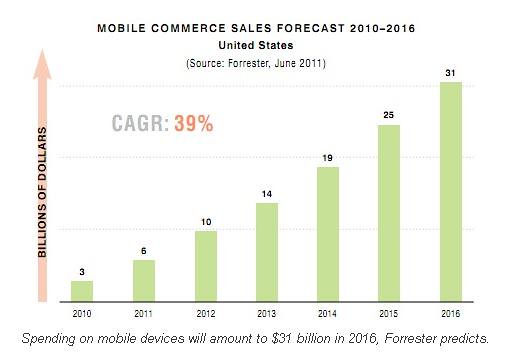
According to Forrester’s report in 2011, m-commerce sales are set to quintuple over the next five years, resulting in $31 billion worth of sales by 2016.

However, despite this forecast, a shocking 16% of the brands in the L2 report are yet to produce any kind of mobile app or website. In fact, almost half of the brands studied were ranked as ‘feeble’, meaning that their investment in mobile to date is little if any.
The brands at the top are offering engaging mobile apps, fully optimized m-commerce sites and flashes of creative genius.

These brands have managed to create some really effective mobile offerings which are often fully integrated into their rest of their offline marketing campaigns.
And those languishing at the bottom:

How are these brands letting themselves down with mobile?
The main reason these brands appear to be lagging behind is because they fail to utilise the unique platforms that m-commerce, iPhone and iPad apps offer.
1. Failures in M-commerce
Those languishing at the bottom of the list are there because they don’t capture the quality of their websites in their mobile experience. Generally, across every category measured, mobile sites consistently failed to replicate the features found on their main sites such as video and product search. Another significant issue they face is that they are directly hindering m-commerce by hosting websites in Adobe flash – which iOS does not support.
2. User experience problems on the iPhone
As the report suggests, the majority of the 70% of brands which have iPhone apps appear to consistently fail to make sure that the user experience is really excellent. Less than a third of these apps use the iPhone’s GPS software, 17% of apps utilise the notification system and even fewer use the phone’s camera and gyroscope capabilities.
L2 quotes ABI Research which reports that the iTunes Store ranking algorithm will begin taking into account qualitative information such as user reviews and frequency of usage. As such, there is little point having a promotional app with little functionality in order to simply maintain appearances. Brands need to invest in mobile apps which are valuable to the consumer and which garner great customer feedback.
What’s next?
- Brands need to invest in m-commerce now to take advantage of the increase in mobile usage.
- They need to create a seamless customer experience across a number of devices.
- Mobile apps need to provide real value and utilise the unique functionality of mobile devices.
By 2015, it is predicted that more users will access the Internet wirelessly via a mobile device than from a wired Ethernet connection. As consumers move their purchasing power from computer to mobile, brands cannot afford to be prudish about innovation in mobile marketing.ovation in mobile marketing.
Source: By Katie Glass on 19th January 2012.
A recent report has revealed that the majority of premium brands are failing to keep up-to-date with the opportunities presented by mobile marketing.
The latest L2 Prestige Mobile IQ report suggests that use of effective mobile marketing practices is currently surprisingly low amongst top brands.
The report looked at mobile applications, mobile sites, mobile marketing (including SMS) and overall innovation and integration, ranking brands included in the study on their Mobile IQ score.
L2 argues that over the next few years, the businesses which will thrive are those willing to engage with mobile marketing techniques. Brands need to develop and optimize powerful mobile commerce sites which are accessible from a range of devices.
According to Forrester’s report in 2011, m-commerce sales are set to quintuple over the next five years, resulting in $31 billion worth of sales by 2016.
However, despite this forecast, a shocking 16% of the brands in the L2 report are yet to produce any kind of mobile app or website. In fact, almost half of the brands studied were ranked as ‘feeble’, meaning that their investment in mobile to date is little if any.
The brands at the top are offering engaging mobile apps, fully optimized m-commerce sites and flashes of creative genius.
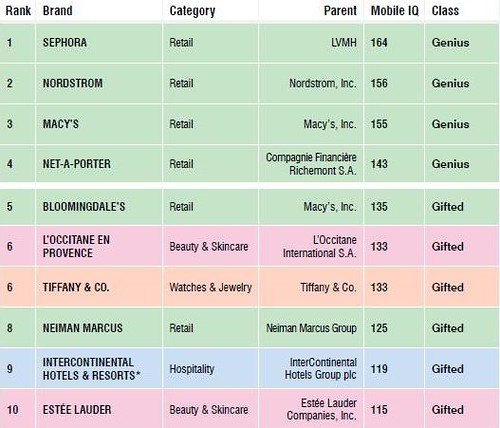
These brands have managed to create some really effective mobile offerings which are often fully integrated into their rest of their offline marketing campaigns.
And those languishing at the bottom:

How are these brands letting themselves down with mobile?
The main reason these brands appear to be lagging behind is because they fail to utilise the unique platforms that m-commerce, iPhone and iPad apps offer.
1. Failures in M-commerce
Those languishing at the bottom of the list are there because they don’t capture the quality of their websites in their mobile experience. Generally, across every category measured, mobile sites consistently failed to replicate the features found on their main sites such as video and product search. Another significant issue they face is that they are directly hindering m-commerce by hosting websites in Adobe flash – which iOS does not support.
2. User experience problems on the iPhone
As the report suggests, the majority of the 70% of brands which have iPhone apps appear to consistently fail to make sure that the user experience is really excellent. Less than a third of these apps use the iPhone’s GPS software, 17% of apps utilise the notification system and even fewer use the phone’s camera and gyroscope capabilities.
L2 quotes ABI Research which reports that the iTunes Store ranking algorithm will begin taking into account qualitative information such as user reviews and frequency of usage. As such, there is little point having a promotional app with little functionality in order to simply maintain appearances. Brands need to invest in mobile apps which are valuable to the consumer and which garner great customer feedback.
What’s next?
- Brands need to invest in m-commerce now to take advantage of the increase in mobile usage.
- They need to create a seamless customer experience across a number of devices.
- Mobile apps need to provide real value and utilise the unique functionality of mobile devices.
By 2015, it is predicted that more users will access the Internet wirelessly via a mobile device than from a wired Ethernet connection. As consumers move their purchasing power from computer to mobile, brands cannot afford to be prudish about innovation in mobile marketing.ovation in mobile marketing.
Source: By Katie Glass on 19th January 2012.
Subscribe to:
Posts (Atom)